dental bridges
A bridge is a technique used to replace a missing tooth where a false tooth is attached to an existing tooth and cemented in place. The two most common types are Adhesive & Conventional.
Adhesive Bridges
An adhesive bridge is best described as a “stick on” bridge.
How do Adhesive Bridges work?
A false tooth is created to match your other teeth and this is produced with a wing attached that gets cemented onto a neighbouring tooth.
What’s the process?
The supporting tooth can be either minimally prepared or sometimes not prepared at all making this a very non-invasive option to replace a missing tooth.
Who is this ideal for?
This type of bridge design is best for front teeth replacement where there is little loading on the false tooth.
Conventional Bridges
A conventional bridge requires the supporting tooth to be prepared down and have some reduction in size and shape for a thin crown shell to be fitted over it.
What’s the Conventional Bridge process?
This crown has the false tooth attached and will replace the missing tooth.
What does it look like?
A bridge can be anywhere from a single false tooth and supporting tooth to more teeth joined together. The design will be decided by your dentist depending on your needs.
Are there any risks?
When reducing a tooth great care is made to only prepare what is necessary. However, there is always a small risk when a tooth has a crown that it can devitalize over time. This means that there is a chance that the nerve can be affected by treatment and the tooth may subsequently require further treatment.

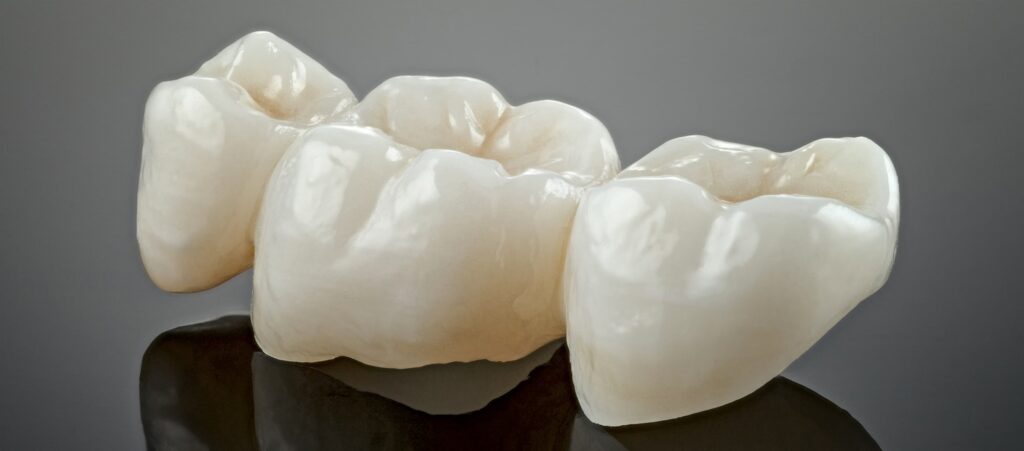
Types of Material
Metal
Bridges can be made of metal or a combination of metal and porcelain.
Zirconia
Newer techniques use more zirconia and porcelain.
Zirconia is a very strong material which is more aesthetic than metal and can be more closely matched to a tooth shade.
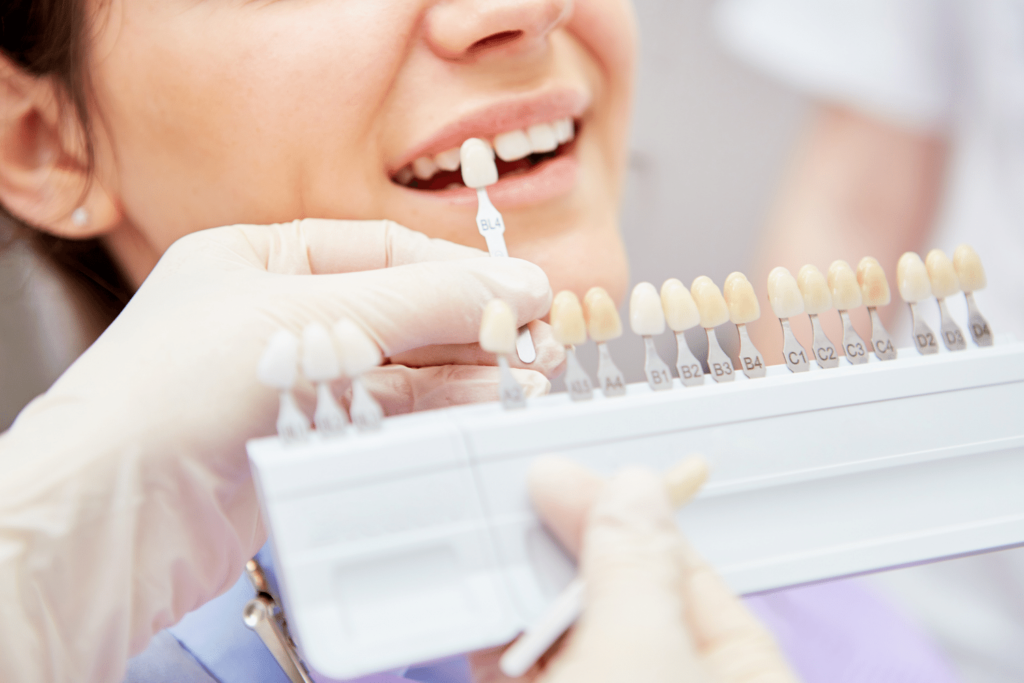
Matching The Shade of Your Teeth
Occasionally for front teeth a visit to the lab might be discussed for shade mapping.
This is a process where we try to recreate a natural enamel shade and pattern in porcelain by combining the visual properties we can see.
When choosing shade it is not just about colour. Translucency, hue and characterisation are all considered.
SAY GOODBYE TO GAPS
dental bridges Benefits
The preparation for your bridge is usually done in one visit and can be under local aneasthetic so it is pain-free. Scans or impressions of your tooth are then taken and sent to a technician who custom makes the crown to specification.
Immediate Results
Provide immediate functional and aesthetic benefits, restoring your smile quickly.
Non-Removable
Provide a fixed tooth replacement option, eliminating the hassle of removable dentures.
Long-lasting Solution
Durable tooth replacement, providing lasting results for years to come.
How long do bridges last?
Bridges can last several years if your oral hygiene is good and they are kept clean.
They need to be tooth brushed well and also cleaned under the false tooth or teeth to prevent plaque accumulation on the supporting teeth.
They can be an excellent way to restore missing teeth and also restore a more natural aesthetic appearance.


Frequently Asked Questions
Initially, it's advisable to avoid very hard or sticky foods, but after a period of adjustment, most people can eat a normal diet.
Fixed dental bridges are cemented in place and cannot be removed by the patient; only a dentist can remove them if necessary.
Yes, modern dental bridges are designed to look natural and blend seamlessly with your existing teeth.
The procedure is typically performed under local anesthesia, so it should not be painful. Some discomfort may be experienced afterward, but it is usually minimal.
Gum health is crucial for the success of a dental bridge. If you have gum disease, it must be treated before a bridge can be placed.